
Why This Purchase Feels Way Harder Than It Should
When I spend close to $1,000 on a sofa it messed my head, because It’s not a casual purchase, but it’s also not expensive enough to feel totally safe. You’re somewhere in the middle where one wrong decision can turn into years of mild daily annoyance. And that’s honestly worse than an obvious mistake.
This post contains affiliate links. That means I may earn a small commission if you purchase through my links—at no extra cost to you.
I’ve bought sectionals I was sure about. I’ve also panic-bought sectionals at 11 p.m. after three days of scrolling, convincing myself that this one was good enough just so I could stop thinking about it. Some worked out fine while some didn’t.
The ones that didn’t usually failed in quiet ways. Cushions that slowly flattened. Fabric that started looking tired after six months. A chaise that felt great in photos but awkward in real life.
If you’re here looking for the best sectional sofas under $1,000, you’re probably feeling a mix of stress and hesitation. I know what you want, you don’t want perfection you just don’t want regret.
This guide is written from that place. Not as a salesperson. Not as a brand. Just someone who’s lived with budget sectionals in apartments, with pets, with family mess, and with the very real annoyance of realizing you made the wrong call.
If your living room still feels tight after furniture placement, large decorative mirrors can make a bigger difference than changing the sofa.
- Why This Purchase Feels Way Harder Than It Should
- What You Should Know Before Buying a Sectional Sofa Under $1,000
- Best Sectional Sofa Under $1,000 for Small Living Rooms
- Best White Sectional Sofa Under $1,000
- Most Comfortable Sectional Sofa Under $1,000 for Daily Use
- Best Sectional Sofa Under $1,000 for Families and Pets
- Best Modular Sectional Sofa Under $1,000 for Flexible Layouts
- Materials That Actually Hold Up Under $1,000
- What Most Reviews Don’t Tell You About Budget Sectionals
- Where to Buy Sectional Sofas Under $1,000
- How I Personally Decide Between Two Similar Sofas When Everything Looks the Same
- Who This Budget Is Perfect For — And Who Should Spend More
What You Should Know Before Buying a Sectional Sofa Under $1,000

Now, when I started to search informations about sectionals I noticed that this is the part actually most guides rush through and it’s the part that actually matters.
A sectional under $1,000 can absolutely be a good purchase. But only if you understand what this price point is built for. Most disappointment comes from expecting it to behave like a $3,000 sofa with a discount price tag.
Frame Reality (And Why It’s Not Automatically Bad)

Searching around I saw that most budget sectionals use engineered wood, plywood, or mixed-material frames adn I know that scares people because we’re taught that “solid hardwood” equals quality right?
Here’s the quiet truth: in apartments and rentals, lighter frames are sometimes better. They’re easier to move, less likely to get damaged on stairs, and more forgiving if you rearrange often.
The real issue isn’t the material it’s construction. Loose joints, weak corner blocks, and poor reinforcement are what cause wobble and noise over time.
This is where a lot of people panic-buy. They see one review mentioning “engineered wood” and immediately assume failure or poor quality. That’s not always the red flag they think it is.
Cushion Expectations And Where Most Regret Starts

Cushions are the make-or-break point for budget sectionals, and If a sofa feels incredibly soft right out of the box, that comfort is often front-loaded. It feels great for a few months and then slowly disappears.
The best-performing sectionals under $1,000 usually feel slightly firmer than expected at first. That firmness is what gives you usable comfort a year or two later.
This is another panic-buy moment. You sit on something soft once, imagine movie nights forever, and ignore the long-term reality.
Best Sectional Sofa Under $1,000 for Small Living Rooms

Small spaces are honestly unforgiving. I’ve learned the hard way that a sofa can technically fit in a room and still make the whole place feel wrong.
I’ve had sectionals where the measurements worked on paper, but once they were in the apartment, everything felt tight and awkward. Walking around the room took effort. Getting past the chaise meant turning sideways.
Deep seats and chunky arms are usually the problem. They look comfortable online, but in an apartment they eat up space fast. The sectionals that actually work in small living rooms tend to look simpler and more streamlined, even if you maybe are not so much a fan for them.
One thing I didn’t think about at first was arm width. Slim arms save way more space than you’d expect. A few inches on each side doesn’t sound like much until you realize you’ve gained actual walking room. Seat depth matters too. When a seat is too deep, you end up half-lying down even when you’re just trying to sit normally, and somehow the room feels smaller because of it.
A reversible chaise is another feature that doesn’t seem exciting until the day you need it. When you move or even just rearrange being able to flip the layout can save you from replacing the whole sofa. I’ve learned that color is easy to compromise on. Layout flexibility is not.
These sectionals don’t feel luxurious in a showroom way. But they let you move around your living room without bumping into furniture. They keep pathways open. They make the space feel breathable. And in an apartment, that kind of comfort matters a lot more than drama. You can also find great options on Amazon here:

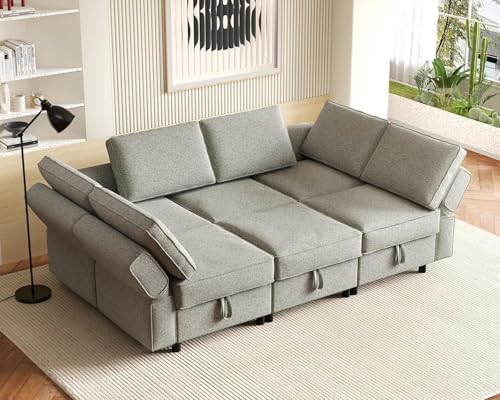

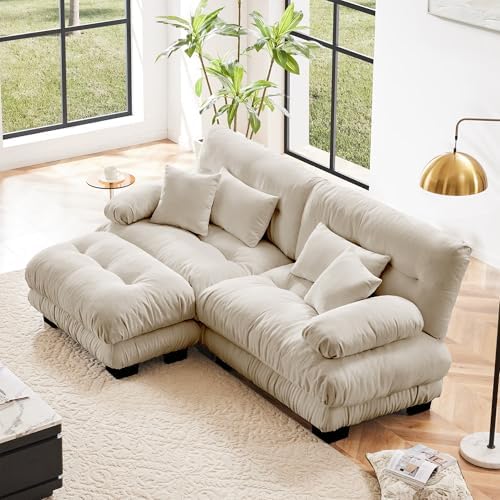

Best White Sectional Sofa Under $1,000

A white sectional under $1,000 is one of those choices that feels calm and confident right up until you actually live with it.
I’ve owned one. At first, it was perfect. Bright. Clean. Exactly what the photos promised. It made the whole room feel lighter. I thought I’d made a great decision.
Then life happened but not in a dramatic way. No red wine disasters. No major spills. Just everyday living.
Over time, I started noticing small changes. Slight discoloration where people always sat. Areas that looked a little dull compared to the rest. Nothing obvious day to day, but once I saw it, I couldn’t stop seeing it.
White shows things darker fabrics hide. Skin oils. Clean hands. The way people lean into the same corner of the couch every night. Even sunlight shifts it over time. That doesn’t mean white is impossible it just means fabric choice matters more than almost anything else here.
At this price point, performance polyester blends and very tight weaves hold up much better than cotton or linen-look fabrics. What usually fails first isn’t the structure of the sofa. It’s how the fabric looks after a year of real use.
Here’s a rule I wish I’d followed sooner: if you’re already Googling stain removers before you buy the sofa, white probably isn’t going to feel stress-free for you. For some homes, white works beautifully and stays looking fresh. For others, it turns into a constant low-level frustration that never really goes away.
Most Comfortable Sectional Sofa Under $1,000 for Daily Use

The sectionals that hold up best for everyday living don’t try to feel fancy on day one. They don’t swallow you when you sit down. Instead, they support your back, keep cushions from sliding around, and look reasonably normal even after a long evening of use.
If you work from your couch, watch TV most nights, or host casually on weekends, medium-firm cushions tend to age far better than plush ones. They don’t feel as exciting in the first five minutes, but they’re the ones you’re still comfortable sitting on a year later.
Visible wear will happen. Cushions will soften. That’s not a flaw it’s foam doing what foam does. A good budget sectional should still feel supportive in year three, even if it doesn’t look perfect anymore. Comfort that lasts is far more important than first-impression softness.
Best Sectional Sofa Under $1,000 for Families and Pets

Kids and pets don’t just use furniture they accelerate time. A sofa that looks fine in a calm, adult-only home can feel worn out in six months once real life shows up.
When you’re shopping in this category, the goal isn’t to find something that looks indestructible. It’s to choose a sectional that fails slowly and quietly instead of all at once.
The thing that was very clear to me from the start was that fabric matters more than almost anything here, so I was inclined to darker, textured fabrics, these age better because they hide everyday reality: crumbs, fur, small stains, and the fact that everyone sits in the same spot.
Smooth fabrics and light colors don’t necessarily wear faster they just show everything, which makes the sofa feel “old” long before it actually is.
Microfiber and tight-weave polyester don’t look exciting in photos, but they survive real households. They resist stains better, don’t snag as easily, and tend to look the same from across the room even after heavy use.
If a fabric description emphasizes softness over durability, that’s usually a sign it won’t love kids or pets.
One underrated tip: focus on removable cushions, not removable covers. Being able to rotate and flip cushions every few weeks quietly extends the life of the sofa. It spreads out wear so one seat doesn’t collapse while the rest still looks new.
Many people obsess over washable covers and forget that cushion rotation does far more day-to-day.
When you’re browsing online especially on places like Amazon scroll past the lifestyle photos and read the lower-star reviews. Not the angry ones, but the calm three- and four-star reviews written after six months or a year.
That’s where you’ll see comments like “holding up well with dogs” or “kids jump on it daily and it’s still fine.” Those details matter more than perfect first impressions.
This is also where people often overthink style and underthink reality. If your home is loud, active, and messy, your sofa needs to be forgiving. A couch you’re constantly policing isn’t comfortable no matter how good it looks.
Best Modular Sectional Sofa Under $1,000 for Flexible Layouts

I think that modular sectionals don’t get nearly enough credit, especially if you rent or know your space isn’t permanent. I used to overlook them because they didn’t feel as “finished,” but after a few moves, my priorities changed.
The biggest benefit of a modular sectional isn’t style, it’s stress relief. When your room is an odd shape, when you move more often than you’d like, or when your layout just refuses to cooperate, being able to rearrange pieces instead of replacing the entire sofa is huge. It takes a lot of pressure off the decision.
If you’re shopping modular sectionals under $1,000, one thing I always check is how the pieces connect. Some use hidden brackets or clips, others rely mostly on weight to keep everything in place. Neither option is perfect, but any kind of connection helps the sofa feel more stable day to day. Totally loose pieces can get annoying fast.
Seat size consistency matters more than people realize. Modular setups where each seat is the same size are much easier to rearrange and live with long term. Once you start mixing in oversized corners or odd-shaped pieces, flexibility drops quickly.
Here’s something no one really talks about them: modular sectionals are usually easier to get into apartments. Tight stairwells, narrow hallways, awkward door frames all of that is way less stressful when your sofa comes in smaller pieces instead of one massive unit that barely fits.
The trade-off is visual polish. Modular sofas tend to have more seams, slightly less structure, and a more casual look. They don’t feel as “finished” as traditional sectionals. But for a lot of homes, that’s a fair trade for adaptability.
If you’re browsing places like Amazon for modular options, customer photos are gold. You’ll see how people actually set them up in small or awkward rooms, which tells you way more than staged photos ever will.
There are a few well-reviewed modular sectionals in this price range that work well as long as you go in knowing flexibility is what you’re paying for, not luxury detailing. You can check some options below:
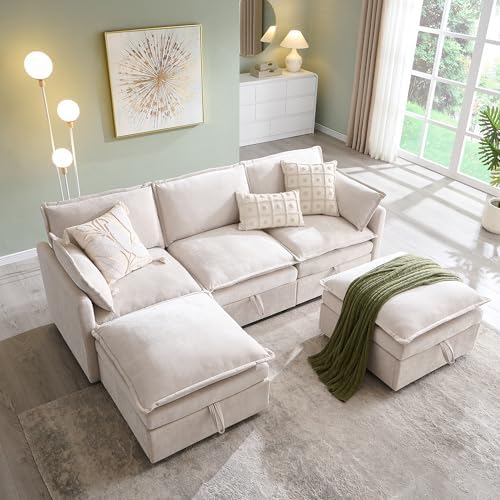
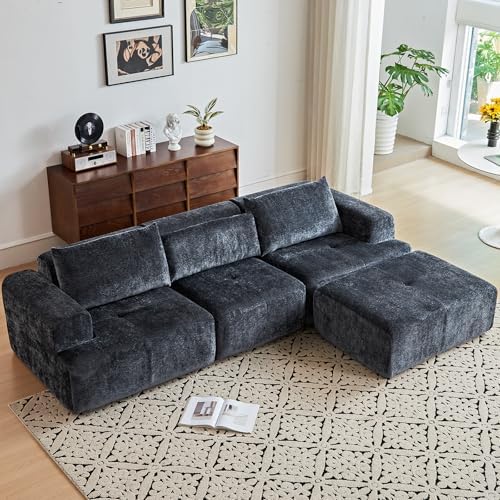
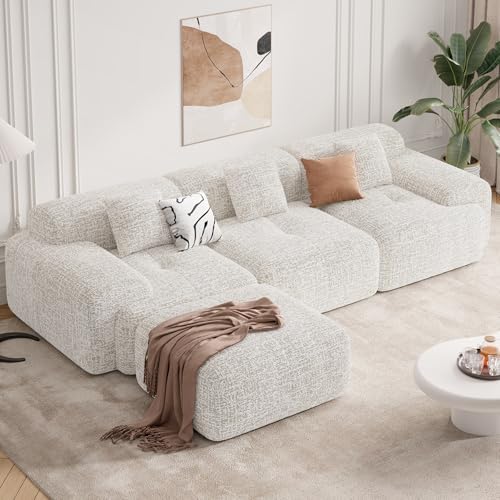

Materials That Actually Hold Up Under $1,000

After owning and sitting on more budget sofas than I’d like to admit, I’ve learned that fabric choice matters more than frame quality at this price.
Polyester blends quietly outperform most other options. They don’t feel fancy, but they resist stains, hold their color, and age in a pretty predictable way. You don’t get a lot of surprises, which is a good thing.
Microfiber handles spills really well, but it loves to collect pet hair. If you have animals, be prepared to lint-roll more often. Faux leather is easy to wipe down and looks great at first, but it usually cracks over time, especially in dry climates. Velvet can look amazing early on, but it tends to show wear quickly unless it’s in a low-use space.
At this budget, choosing fabric isn’t about luxury. It’s about how much wear you’re willing to tolerate and how much maintenance you want to deal with. Once you look at it that way, decisions get a lot easier.
What Most Reviews Don’t Tell You About Budget Sectionals

Most reviews are written right after delivery, when everything still feels new. The problem is that first impressions don’t tell you much about what it’s like to live with a sectional a few months in. That’s where people feel disappointed even when the sofa itself isn’t actually bad.
Assembly is almost never smooth. Instructions are usually vague, diagrams skip steps, and screws don’t always line up perfectly. That doesn’t mean you got a defective sofa. It just means budget furniture is designed to be assembled quickly, not gracefully. Expect some trial and error and give yourself more time than the listing suggests. Going in expecting frustration makes it way less stressful.
Cushions are another common panic point. Most budget sectionals arrive heavily compressed to save on shipping. When you first unbox them, they can look underfilled or uneven. That’s normal. Foam needs time to expand and settle sometimes a few days, sometimes a couple of weeks.
Early flattening doesn’t automatically mean the sofa is failing. Often it’s just adjusting to how you actually sit. Returns technically exist, but they’re rarely easy. This is where panic-buying hurts the most. Repacking large pieces, scheduling pickups, and dealing with restocking fees can be exhausting.
The best thing you can do for yourself is read the return policy before you click “buy,” not after regret starts creeping in. Knowing the rules upfront makes you a much calmer buyer.
Where to Buy Sectional Sofas Under $1,000

This part trips a lot of people up, so let me take some pressure off right away: where you buy matters less than most people think.
At this price point, a lot of sectionals come from the same manufacturers and warehouses, even if the store names are different. I’ve seen nearly identical sofas sold under different brand names with slightly different photos and prices. Once I realized that, I stopped chasing the “perfect” store and started paying attention to how the buying experience actually felt.
Buying online usually gives you better prices and more options, especially if you’re looking for a specific size or layout. The downside is that returns take effort. Repacking a sectional is never fun, and waiting for pickups can test your patience.
My advice is to only order online if you’re okay with the idea that returning it will take a little work. Knowing that upfront makes the whole process less stressful.
Local furniture stores have their place too. Being able to sit on a sofa before buying can be reassuring, especially if you’re nervous about comfort. But selection is often limited, and prices are usually higher for similar quality.
If you do go in-store, I treat it more like a testing ground than a final decision figure out what seat depth and firmness you like, then compare options elsewhere.
The thing that helped me a lot was shifting my mindset. You’re not really choosing a sofa as much as you’re choosing a company to deal with if something goes wrong. Clear return policies, realistic delivery timelines, and responsive customer support matter more than branding or buzzwords.
But, before you check out anywhere, I always recommend doing three small things: read the return policy in full, search the store name plus “return” or “delivery issue,” and skim recent customer reviews about customer service specifically. It takes a few extra minutes, but it saves a lot of second-guessing later.
Once you stop expecting perfection and focus on support, the decision gets easier. And that’s really the goal here making a choice you can live with, not one you’ll keep replaying in your head.
How I Personally Decide Between Two Similar Sofas When Everything Looks the Same

This happens to me almost every time, especially when I needed to move from one place to another. Two sectionals, same price, same size, same vibe and suddenly I’m stuck, opening twenty tabs and second-guessing everything.
When I hit that point, I stop looking at photos and start asking myself a few very specific questions.
First, I think about where the sofa will fail first, because at this price point, something always gives eventually. I don’t ask which one looks better today I ask which one I’ll still tolerate when it starts showing wear.
A darker, textured fabric almost always wins here. If one option looks amazing but already feels “high maintenance” in my head, I know I’ll resent it later.
Then I check seat height and depth, not just overall dimensions. This is something most people miss. A sofa can be the same length and still feel completely different to live with. If one has a slightly shallower seat, that’s usually the one I choose it’s easier to sit normally, easier for guests, and it works better long term in small spaces.
Next, I look at how the cushions are constructed. I don’t need fancy foam descriptions. I just want to know if the cushions are loose, reversible, and easy to rotate.
That one detail quietly extends the life of a budget sofa more than almost anything else. If one option has fixed cushions and the other doesn’t, the decision is basically made for me.
This is an unpopular opinion, but I also pay close attention to the “boring” reviews. Not the five-star love letters and not the one-star rants the calm three- and four-star reviews written after six months or a year.
That’s where people mention things like “still comfortable,” “holding up fine with kids,” or “assembly was annoying but manageable.” Those comments tell you what daily life actually looks like.
Here’s a hack that’s saved me more than once: I search the product name plus words like “after,” “months,” or “update.” People who come back to update a review tend to be more honest, and they’re usually past the honeymoon phase.
If I’m still torn, I check return logistics, not just return eligibility. Can it be picked up, or do I have to haul it somewhere? Is there a restocking fee? One sofa being easier to return has tipped the decision for me more times than I’d like to admit.
And finally, I trust the option that feels less dramatic. The sofa that blends in. The one I won’t constantly think about. Budget furniture works best when it quietly does its job. If one option feels like it’s trying too hard to impress, I’ve learned that it usually asks for more attention later.
When everything looks the same, I choose the sofa that feels easier to live with not the one that looks better in photos. I’ve never regretted that choice.
Who This Budget Is Perfect For — And Who Should Spend More
This budget is perfect if you want flexibility, lower stress, and furniture that fits your current life. You should spend more if long-term appearance matters more than adaptability. There’s no wrong choice only honest ones.
If you go in clear-eyed, the best sectional sofas under $1,000 can make your space comfortable without turning into daily regret.