
Decorative Large Mirrors Are Everywhere in Living Rooms Right Now
This post contains affiliate links. That means I may earn a small commission if you purchase through my links—at no extra cost to you.
Table of Contents
- Decorative Large Mirrors Are Everywhere in Living Rooms Right Now
- Why Decorative Large Mirrors Are Trending (And Why They Actually Work)
- How to Choose the Right Size for a Large Decorative Mirror (Without the Stress)
- Mirror Shapes & Styles That Actually Work in Living Rooms
- Irregular or Organic Mirrors: When the Room Needs Personality
- Where to Place Decorative Mirrors in the Living Room (What Designers Do)
- Best Mirror Placement for Dark Living Rooms (How to Add Light Without New Windows)
- Budget-Friendly & Renter-Friendly Decorative Mirror Ideas That Actually Look Good
- How to Create a Large Decorative Mirror Wall Using Small Mirrors
- Frequently Asked Questions About Decorative Large Mirrors for Living Rooms
- Why the Right Mirror Changes More Than Just the Wall

If your living room feels a little small, a bit dark, or not quite finished, a decorative large mirror can be the easiest fix you didn’t know you needed.
Large decorative mirrors for the living room softly reflect light, open up the space, and add that warm, pulled-together feeling that makes a room feel truly lived in not just decorated.
Why Decorative Large Mirrors Are Trending (And Why They Actually Work)
Let me start with a tiny confession: the first time I bought a decorative mirror, it wasn’t because I wanted to be “on trend.” It was because my living room felt… dull. A little flat. No matter how much I rearranged furniture, something was missing. Then I hung a large mirror across from my window and I kid you not, the entire energy of the room changed in a single afternoon.
That’s the thing about mirrors. They look simple, but they behave like architecture.
And apparently, the rest of the internet has caught on too. Searches for “modern mirror aesthetic” and “arched wall mirrors living room” are exploding on Pinterest, and TikTok designers keep repeating the same two phrases: visual expansion and light direction the secret reason decorative mirrors feel so magical in a living room.
What I noticed around was that people aren’t just looking for décor… they’re looking for solutions, especially ones that instantly make a room feel bigger, brighter, or more intentionally designed. But honestly? Trend cycles only tell half the story. Here’s what’s actually driving the obsession:
Here’s the part where most people (honestly, almost everyone, invluding your’s truly) freeze: choosing the right size. And this isn because you measure the wall, than you measure the console, of course you hold the tape measure up three times, then you squint, you panic and you end up closing the browser tab.
If that’s you let me just tell you that you’re not alone.
The truth is: large mirrors almost always look better than small ones, especially with decorative large mirrors living room styles trending across Pinterest and Google. A bigger mirror adds presence, balance, and depth… even if it feels bold at first.
Let’s break it down simply so you can pick the perfect size with zero stress.

How to Choose the Right Size for a Large Decorative Mirror (Without the Stress)
When I first started using mirrors in living rooms, I made the same mistake a lot of people do: I picked one because it looked pretty online. Once it was on the wall, though, something felt off. The room still felt dark. The mirror felt awkward. That’s when I learned the truth most décor articles skip mirror shape and placement matter more than the mirror itself.
If you’ve ever wondered why a mirror looks stunning in someone else’s home but underwhelming in yours, this section is for you. But we are here to talk about the best shapes that goes well in your living room layout so let’s talk about this.

Mirror Shapes & Styles That Actually Work in Living Rooms
Round Mirrors: Soft, Calm, and Space-Friendly
Round mirrors are one of those design choices that quietly fix a lot of problems. I reach for them when a living room feels boxy, rigid, or visually heavy.
Because there are no sharp corners, decorative round mirrors soften everything around them. They’re especially helpful in small living rooms where too many straight lines can make the space feel crowded instead of cozy.
I’ve found they work best:
- Above a fireplace mantel that feels too harsh or angular
- In rooms filled with square furniture or shelving
- Over rounded accent tables or curved sofas
- In minimalist or Scandinavian-style living rooms
They don’t dominate the room they gently balance it.

Rectangular Mirrors: Clean, Structured, and Timeless
When I need a mirror to anchor a space, I choose rectangular. These are the most versatile option and the easiest to style if you’re unsure where to start.
Rectangular mirrors bring order to a room. They visually ground long walls, help define seating areas, and work beautifully as wall mirrors in living rooms that need structure.
I use them most often:
- Behind sofas to visually widen the room
- Over consoles or sideboards
- For grid-panel or loft-inspired mirror wall designs
- In long or open-plan living rooms
If you’re leaning toward decorative mirrors with a modern feel, this shape is almost always a safe and stylish choice.

Arched Mirrors: Soft Drama Without Overdoing It
Arched mirrors are popular for a reason. They introduce a sense of architecture without feeling heavy or formal. I love using them when a room feels flat but I don’t want to add more furniture or décor.
They naturally draw the eye upward, which helps living rooms feel taller and more open.
Arched mirrors shine best:
- Above fireplace mantels
- Behind sofas as a statement piece
- In neutral, modern, or transitional spaces
- In rooms that need elegance without stiffness
I love that they feel intentional and not trendy which is why they’ve stayed popular.

Irregular or Organic Mirrors: When the Room Needs Personality
Now, let’s move on from the classic mirror shapes to the more bold ones, these are the mirrors I use when a living room feels a little too safe. Organic, asymmetrical mirrors act more like wall art than traditional décor.
I often recommend them to aquaintaces who want a focal point without committing to heavy furniture or bold paint.
They’re great for:
- Adding character to neutral rooms
- Modern boho or eclectic interiors
- Creating a focal point on a small wall
- Replacing traditional artwork
Because the shape is already expressive, the rest of the styling can stay simple.

Grid-Panel Mirrors: Light-Boosting and Architectural
Let me share something with you, grid-panel mirrors are one of my favorite, they are the perfect solution for dark or window-limited living rooms, because they create the illusion of windows, which immediately changes how the space feels.
They also work particularly well:
- In apartments with limited natural light
- On large blank walls
- In industrial or modern homes
- As mirror wall design statements
This is one of my favorite mirror styles for darker living rooms. Grid-style arched mirrors reflect light in a way that feels softer and more natural, almost like adding an extra window. The options below are good examples of the size and shape that tend to work best in spaces that need more light.


You don’t need this exact mirror you should focus on the shape, grid style, and overall scale.
Rattan, Gold, and Black Frames: Choosing the Right Finish
You may think that frames don’t matter that much, but you are wrong, frames matter more than most people realize. The same mirror shape can feel completely different depending on the finish you choose warmer, sharper, softer, or more dramatic.
I like to think of frames as the tone-setter for the room:
- Rattan or woven frames add warmth and texture. They’re perfect for boho, coastal, or relaxed living rooms that feel a little flat or overly neutral.
- Gold frames reflect light softly and bring a subtle glow. They work beautifully in gray-heavy spaces, transitional interiors, or rooms that need warmth without feeling flashy.
- Black frames create crisp contrast and definition. They’re ideal for modern, minimalist, or industrial living rooms where clean lines matter.
When you’re unsure, don’t match the frame to your furniture match it to the feeling you want the room to have. Calm, cozy, bold, or refine
The mirrors below are good examples of how different frame finishes can shift the mood of a living room, depending on the style you’re aiming for.
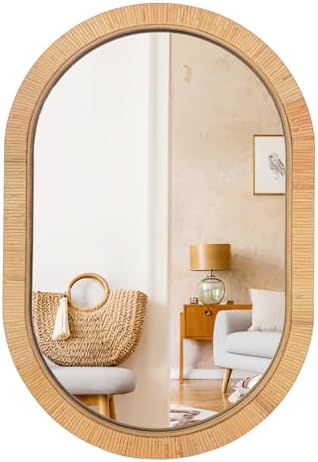


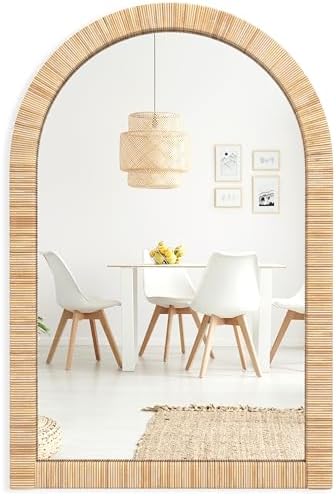

Visual Examples of Popular Mirror Shapes in Real Living Rooms
I know I wrote about so many shapes that it can be overwhelming but choosing a mirror shape doesn’t have to feel overwhelming. Sometimes a quick visual comparison is all it takes.
The mirrors below show how each shape shows up in real spaces, with different proportions and finishes. Use them as inspiration while you narrow down what works best for your room.


Where to Place Decorative Mirrors in the Living Room (What Designers Do)
This is where most people get stuck. Even a beautiful mirror can feel underwhelming if it’s not placed with intention but once you know what to look for, the right spot becomes surprisingly obvious.
Above the Fireplace Mantel
This is a classic for a reason. A mirror here adds height and creates a natural focal point.
Round or arched mirrors soften stone or brick, while rectangular ones feel more modern. In darker rooms, I slightly angle the mirror downward to catch and reflect more light.
Behind the Sofa
If your living room feels narrow or cramped, this placement can instantly help. A wide mirror behind the sofa visually stretches the room and reflects light from nearby windows.
It’s especially effective in small living rooms where wall space is limited.
Opposite or Next to Windows
This is the most reliable way to brighten a dark living room. I place mirrors across from:
- Small windows
- French doors
- Floor or table lamps for evening light
The goal is reflection without glare subtle, not blinding.
Between the Dining and Living Areas
In open layouts, a mirror helps visually connect the two spaces. This is why decorative mirrors for dining rooms and shared spaces are trending because they make the transition feel intentional instead of accidental.
Corners That Feel Awkward or Empty
A tall, leaning mirror in a corner can solve layout problems instantly. It adds vertical weight and makes the room feel more finished without crowding it.
Gallery Wall Mirror Mixes
I like combining one medium mirror with smaller art pieces rather than filling the wall with mirrors alone. Keeping frames in a similar tone helps the wall feel cohesive instead of busy.
Oversized Floor Mirrors
When a living room lacks a focal point, a large leaning mirror can become the star. It works best in rooms with higher ceilings or minimal furniture.
Symmetry and Layering
Using two identical mirrors on either side of a sofa or console creates calm and balance. Layering a smaller framed mirror over a larger frameless one adds depth and modernizes older pieces.
Why This Works
Mirrors don’t work because they’re trendy. They work because they redirect light, balance proportions, and add visual depth and those principles don’t change.
Once you understand why a shape or placement works, choosing the right mirror stops feeling overwhelming and starts feeling intuitive.

Best Mirror Placement for Dark Living Rooms (How to Add Light Without New Windows)
Dark living rooms are one of the most common design frustrations I hear about and mirrors are one of the most effective fixes when used intentionally.
The biggest mistake people make is hanging a mirror where it looks good instead of where it actually reflects light.
In darker rooms, I always start by identifying the strongest light source, even if it’s small. That might be:
- A single window
- Glass doors
- A floor lamp or table lamp
Placing a mirror directly opposite or slightly adjacent to that light source allows it to bounce illumination deeper into the room, making the space feel brighter and more breathable.
For very dark living rooms, grid-panel mirrors work especially well because they mimic the look of windows. Even when they’re reflecting artificial light, the effect is surprisingly natural.
One subtle trick I rely on: I angle the mirror just slightly not enough to notice, but enough to redirect light where the room needs it most. The goal isn’t glare. It’s softness. When mirrors are placed with light in mind, the room doesn’t just look brighter it feels lighter

Budget-Friendly & Renter-Friendly Decorative Mirror Ideas That Actually Look Good
Here’s the good news: creating a beautiful living room with decorative mirrors doesn’t require a big budget, permanent wall damage, or professional installation. In fact, some of the most Pinterest-saved mirror wall designs are renter-friendly, low-cost, and surprisingly easy to pull off even if you’ve never done a DIY project before.
If you’re searching for decorative large mirrors for living room spaces on a budget, or you’re renting and worried about nails, anchors, or losing your deposit, these solutions are made for you.
Command-Strip Mirror Hanging (Yes, It Actually Works)
For renters and small-space dwellers, command-strip mirror hanging can be a lifesaver if it’s done correctly of course. The key is choosing lightweight decorative mirrors or acrylic mirrors and using multiple heavy-duty strips, not just one or two.
Place the strips evenly around the mirror’s frame to keep it flush against the wall and prevent shifting over time. This method works especially well for:
- Apartment living rooms with limited wall space
- Hallways or narrow walls that need light
- Decorative wall mirrors under 20 lbs
A tip that I found out is toalways clean the wall with rubbing alcohol first. This one step dramatically improves hold strength and prevents slipping.

Mirror Stickers, But Make Them Look Expensive
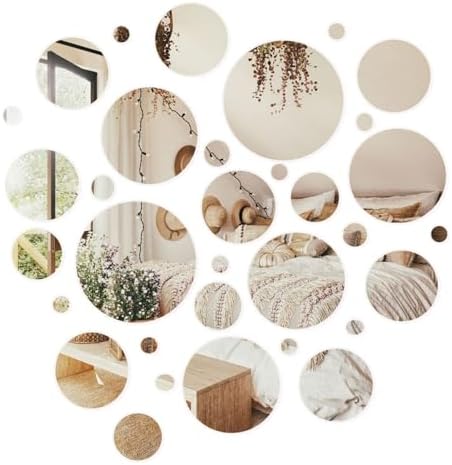
Forget the warped, funhouse-style mirror stickers. High-quality acrylic mirror tiles have come a long way, and when used intentionally, they can look incredibly modern.
These are ideal if you want the look of a large decorative mirror without the weight or commitment. Use them to create:
- A DIY grid-panel mirror wall (perfect for dark living rooms)
- Clean, geometric mirror designs for modern interiors
- Custom mirror accents in entryways or awkward living room corners
They adhere best to smooth, painted walls and are one of the most renter-safe ways to experiment with mirror wall design trends.


DIY Mirror Frame Upgrades That Make Budget Mirrors Look High-End
If you’ve ever browsed Hobby Lobby mirrors or spotted a thrift-store mirror that felt close but not quite right the frame is usually the problem, not the mirror itself.
With a few simple upgrades, basic mirrors can look custom and high-end:
- Spray-paint outdated frames in matte black, warm white, or champagne gold for a modern mirror aesthetic
- Add thin molding strips to flat frames to mimic expensive panel mirrors
- Wrap frames in cane webbing or natural fiber for a cozy boho upgrade
These small changes can turn budget decorative mirrors into statement pieces that look far more expensive than they are.

Thrift Flipping: The Most Underrated Mirror Hack
Thrift stores are one of the best places to find large mirrors for living rooms especially older ones with solid construction. Focus less on color and more on quality.
Look for mirrors with:
- Solid wood or metal frames
- Clean backing and sturdy weight
- No cracks or deep scratches in the glass
A light sanding, fresh paint, or updated frame detail is often all it takes to transform a thrifted mirror into a beautiful, modern focal point

How to Create a Large Decorative Mirror Wall Using Small Mirrors
If a single large mirror isn’t in your budget, don’t worry, there is a workaround to it, here’s a designer-approved workaround: create a mirror wall using several smaller decorative mirrors arranged in a cohesive layout.
Stick to a unified color palette or frame finish to keep the look intentional, not cluttered. This approach is especially popular on Pinterest because it:
- Makes small living rooms feel larger
- Reflects light across the entire wall
- Adds personality without overwhelming the space
It’s one of the easiest ways to get the impact of a large decorative mirror for the living room without the price tag or commitment.

Frequently Asked Questions About Decorative Large Mirrors for Living Rooms
Are decorative large mirrors good for small living rooms?
Yes. Large mirrors reflect light and space, which helps small living rooms feel more open and less cramped especially when the mirror has a slim frame or a simple shape.
What mirror shape makes a living room look bigger?
Round mirrors soften visual clutter, while tall rectangular mirrors draw the eye upward, making the room feel taller and more spacious.
Where should a mirror be placed to brighten a dark living room?
Place mirrors opposite or slightly adjacent to windows, glass doors, or lamps so they can reflect light deeper into the room without causing glare.
Is it okay to put a large mirror behind a sofa?
Yes. A mirror behind the sofa is one of the most effective ways to visually widen a living room and reflect natural light.
How high should I hang a decorative wall mirror in the living room?
The center of the mirror should usually sit around eye level (about 57–60 inches from the floor), or 4–8 inches above furniture like a sofa or console.
Are mirrors safe for renters to hang?
They can be. Lightweight mirrors, acrylic mirrors, and properly installed command strips are renter-friendly options when weight limits and wall prep are followed.
What mirror styles are trending for living rooms right now?
Arched mirrors, organic shapes, grid-panel designs, and minimalist black or warm metallic frames are especially popular heading into 2026.
Why the Right Mirror Changes More Than Just the Wall
If there’s one thing I hope this guide makes clear, it’s this: choosing a decorative mirror isn’t about following trends or filling empty wall space. It’s about understanding how your room behaves.
Mirrors work because they:
- Redirect light
- Balance proportions
- Create depth where walls fall flat
Once you start thinking of mirrors as tools not just décor the decisions become easier. You stop second-guessing sizes, shapes, and placement. You start choosing with confidence.
And whether you’re styling a small apartment, a dark living room, or a space that just feels unfinished, the right mirror doesn’t shout for attention. It quietly makes everything else look better