
This post may contain affiliate links. If you purchase through these links, I may earn a small commission at no extra cost to you.
When I rented my first apartment, I thought I was behind, and that is I saw that everyone else seemed to know what they were doing. They had matching furniture, “rules” about neighborhoods, opinions about leases, and a confidence I didn’t feel at all and I remember sitting on the floor of an almost-empty living room thinking, I did this wrong somehow.
What I eventually learned is that most first apartments feel confusing not because you’re unprepared but because no one tells you what actually matters once you’re living there.
This guide is everything I wish someone had calmly explained to me before I signed my first lease, unpacked my boxes, and realized real life doesn’t look like apartment photos online.
- Why Renting Your First Apartment Feels So Overwhelming (And What Actually Helps)
- First Apartment Renting Budgeting Mistakes I Learned the Hard Way
- What to Check Before Signing Your First Apartment Lease
- A Realistic First Apartment Checklist (What Actually Matters)
- The “One-Week Rule” That Stopped My Overspending Instantly
- Renter-Friendly Habits That Made My Apartment Feel Calmer Not Just Prettier
- Small Setup Wins That Made Daily Life Easier (Even on a Budget
- What I’d Do Differently If I Were Renting My First Apartment Again
- Final Thought: Apartment Tips for First-Time Renters (For Anyone Feeling Behind)
Why Renting Your First Apartment Feels So Overwhelming (And What Actually Helps)

For me besides dealing with logistics, the emotional overload was huge, I felt that I was making a lot of “adult” decisions all at once money, location, contracts, furniture, utilities often for the first time.
What made it worse for me was the forever comparison. Friends seemed settled. Social media made it look effortless. Meanwhile, I was Googling things like “is this a normal amount of noise?” at 1 a.m.
What actually helped wasn’t learning more rules, but simplifying priorities. Instead of trying to optimize everything, I focused on three questions:
Can I sleep here?
Can I cook here without frustration?
Can I afford this without constant anxiety?
I left everything else away. Delaying decisions turned out to be one of the most useful skills I learned as a renter.
First Apartment Renting Budgeting Mistakes I Learned the Hard Way

I thought budgeting meant covering rent, utilities, and groceries and that was it, but I didn’t realize how many small, annoying expenses show up in the first month alone.
Things like buying trash cans because the apartment didn’t come with one. Replacing shower curtains, light bulbs, basic tools. Even small fees key copies, parking permits, package lockers quietly chipped away at my budget. None of these felt big, but together they added up fast.
One mistake I made was buying duplicates because I didn’t know what I already had. I bought cleaning supplies twice. Kitchen tools I barely used. If I were doing it again, I’d keep a simple running list on my phone for the first two weeks and only buy what solves an immediate problem.
Another thing no one talks about enough: emotional spending after moving.
When you’re exhausted, living among boxes, and nothing feels settled yet, it’s really tempting to buy things just to feel “done.” I ordered decor and furniture not because I needed them but because I wanted the apartment to feel like home right now.
What helped was separating my budget into two phases:
- a setup budget (temporary, messy, flexible)
- and a real monthly budget that didn’t start until month two
For me, that mental shift alone reduced so much stress. The first budget is just a rough draft. Real numbers don’t show up until you’ve lived there a bit. One practical fix that worked for me was creating a small “first-month buffer” category even $150–$300 — just for unexpected basics. Knowing that money was meant to be spent took the guilt out of it.
I also stopped trying to micromanage every dollar. Instead of strict rules, I focused on reducing friction:
- buying fewer things upfront
- waiting 48 hours before non-essential purchases
- choosing items that solved more than one problem
For example, a simple storage ottoman gave me seating, storage, and a surface instead of buying three separate pieces. If you want ideas, you can check options like this on Amazon or similar retailers just to see what multifunction pieces exist not necessarily to buy immediately. Some options for you too look can be foudn below:


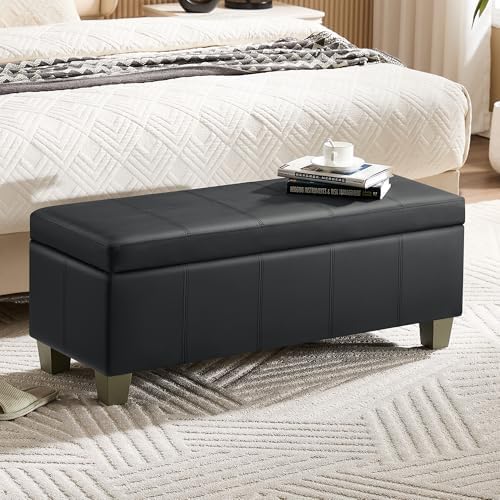
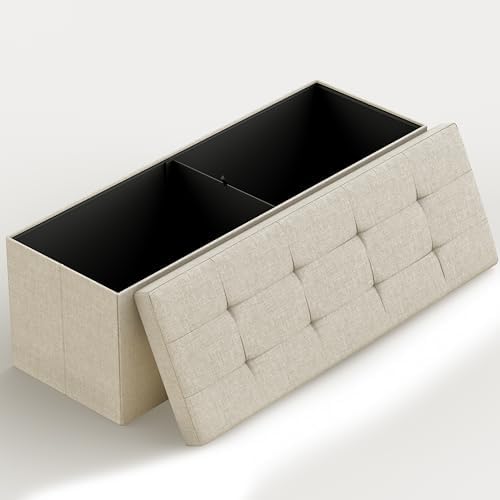

I learned that flexibility mattered more than discipline and once I stopped trying to “win” at budgeting and focused on making the apartment easier to live in, my spending naturally settled down.
If there’s one thing I’d tell any first-time renter: your budget doesn’t fail in month one it adjusts. And that adjustment is part of the process, not a mistake.
What to Check Before Signing Your First Apartment Lease

I thought it was ok only to skim the lease and forget to read the apartment itself. Big mistake.
Noise matters more than you think. Not just street noise hallways, elevators, neighbors above you. Visit at different times if you can. Stand still. Listen. Also, count the outlets, seriously. Bad outlet placement turns into extension cords everywhere.
Test water pressure and temperature, because weak or inconsistent water wears you down daily. Look at storage with real items in mind. Cleaning supplies, trash bags, laundry baskets. If you can’t picture where daily mess lives, it’ll end up on the floor.
Ask how heating and cooling work and what bills look like in summer and winter.
Check trash and laundry access like it’s essential because it is. Then, open everything, cabinets, drawers, windows, doors. If it sticks now, it’ll annoy you later.
Ask how maintenance requests actually work, not just whether maintenance exists. A place can look fine and still be exhausting to live in. Livability beats aesthetics every time.
These are just a few of the things I wish I knew before my first apartment.
If pastel vibes are totally your thing, you’ll love my post on Beautiful Pastel Apartment Decor Ideas That’s TikTok-Approved & Low-Cost. It’s full of friendly hacks that make your space feel dreamy without blowing your budget.
A Realistic First Apartment Checklist (What Actually Matters)
When I first moved in, I made one mistake that almost everyone makes: I tried to furnish rooms instead of fix problems. Once I stopped asking “What should go here?” and started asking:
- Where do I dump my keys?
- Why does laundry pile up here?
- What’s annoying me every single day?
then my spending dropped fast.
A simple rule that worked for me:
Don’t buy furniture until the space annoys you at least twice. That’s how I avoided impulse buys and ended up with pieces I actually needed.
Examples that saved me money:
- Instead of a console table → $15 wall hooks + a tray
- Instead of a bulky coffee table → C-shaped side table (Wayfair, Amazon Basics, IKEA)
- Instead of a dresser right away → fabric drawer units (IKEA SKUBB, Amazon)
The “One-Week Rule” That Stopped My Overspending Instantly

This may sound boring to you, but it worked great for me. If I wanted something:
- I added it to a list
- Waited 7 days
- Revisited it after living with the annoyance
About 70% of items didn’t survive the wait, but the ones that did?
- Solved a real daily problem
- Got used constantly
- Never felt like regret purchases
If the problem can be solved with:
- hooks
- bins
- lighting
- wheels
- vertical storage
then it probably doesn’t need a big furniture piece.
Renter-Friendly Habits That Made My Apartment Feel Calmer Not Just Prettier

Honestly, It took me a while to realize that decor wasn’t what was stressing me out. I could add pillows, art, plants and still feel tense in my own space. What actually helped wasn’t making the apartment look better. It was making it easier to live in.
The biggest shift for me was creating a simple weekly reset. Nothing intense. No deep cleaning. Just about twenty minutes where I cleared surfaces, took the trash out, and put things back where they belonged. Not “perfect,” just neutral. That alone made the apartment feel like it could breathe again, and honestly, so could I.
Another thing I stopped doing was fighting clutter. If something kept landing in the same spot keys on the counter, bags by the door, mail on the table I took that as information instead of a failure.
That’s where a small tray, basket, or hook would go. Designing around real habits instead of ideal ones made the space feel calmer without me having to try harder. One unexpectedly helpful habit was keeping a tiny “apartment kit.” And I din’t did nothing fancy. Just a screwdriver, a measuring tape, a couple of spare lightbulbs, felt furniture pads, and some Command hooks.
I can’t tell you how many small annoyances that kit solved without a trip to the store or a spiral of frustration. It made me feel more capable in my own space, which matters more than aesthetics
Small Setup Wins That Made Daily Life Easier (Even on a Budget

Some of the best changes I made weren’t pretty in a Pinterest way but somehow they worked, for example under-bed storage with wheels gave me back an entire closet’s worth of space.
Slim trash cans placed where mess actually happened (not just hidden under the sink) cut down on clutter immediately. Plug-in wall sconces helped me avoid bulky floor lamps and freed up walking space. Tension rods turned awkward closets into usable storage for cleaning supplies. Over-the-door organizers quietly added storage without damaging anything.
And because I was renting, I was very happy as none of these required drilling, and none were expensive. All of them reduced daily friction, which is the part people don’t talk about enough. When your apartment is easier to move through, you feel calmer without even realizing why.
What I’d Do Differently If I Were Renting My First Apartment Again

If I could go back and do it over, I wouldn’t start with decor at all. I’d start with trash placement. I didn’t realize how much that affects everything else until I lived with a setup that didn’t work.
I’d also simplify my finishes way more. Fewer materials, repeated consistently, made the space feel quieter and easier to manage. I’d choose drawers over open shelves almost every time not because shelves are bad, but because drawers forgive mess in a way shelves don’t.
I’d stop trying to make everything “match” and pay more attention to flow instead. How do I move through the space? Where do I pause? Where do things pile up? Those questions matter more than color coordination ever did.
And maybe most importantly, I’d stop assuming that discomfort meant I was bad at adulting. Most of the time, it just meant my systems weren’t working yet.
Calm didn’t come from getting it right the first time. It came from adjusting, slowly, until the apartment started working with me instead of against me.
Final Thought: Apartment Tips for First-Time Renters (For Anyone Feeling Behind)

What i personally learned is that your first apartment isn’t supposed to look finished, it’s supposed to teach you:
- how you live
- what you actually need
- what stresses you out
- what makes you feel at home
If the space feels easier to live in this month than last month, you’re doing it right. Everything else is noise.